
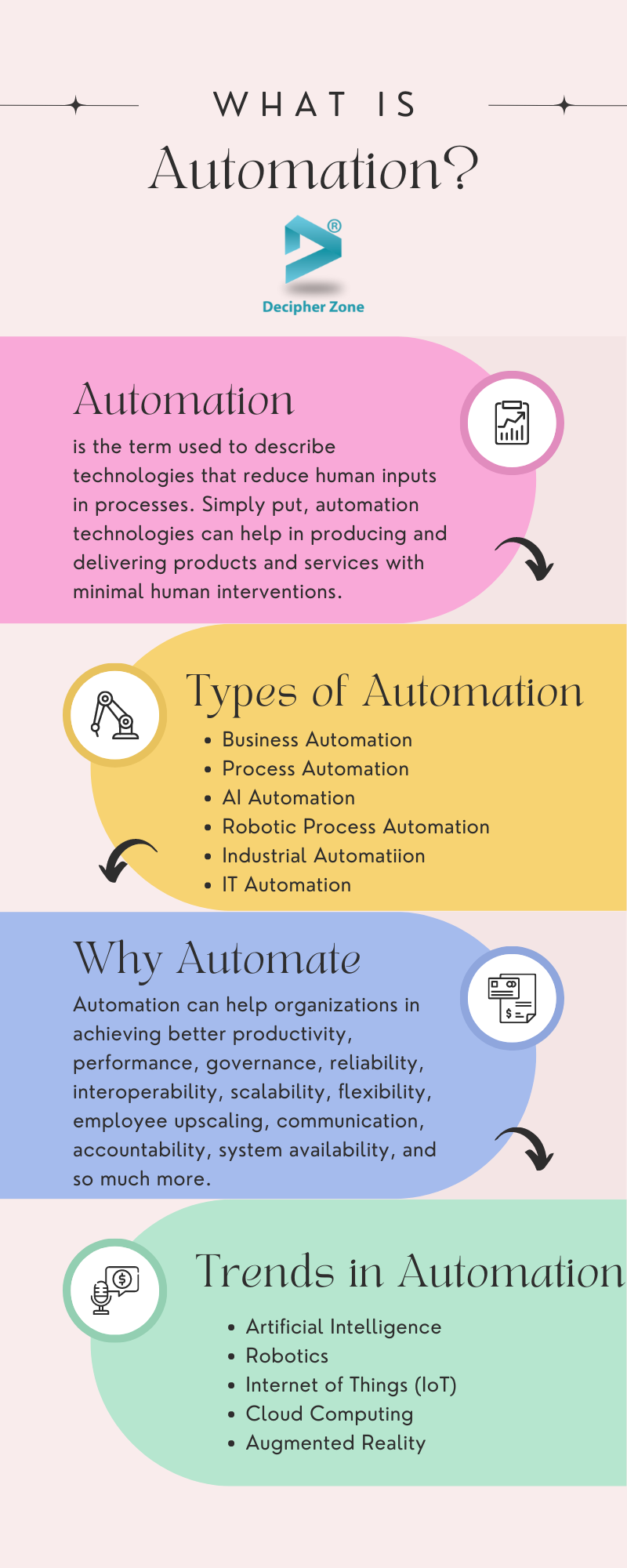
Defining Automation in the Modern Tech Landscape
Automation is a fundamental concept in software engineering and industrial processes, referring to the use of technology to perform tasks with minimal human intervention. In the context of modern software development, automation extends beyond simple scripting to encompass complex workflows that enhance efficiency, reduce errors, and accelerate delivery cycles. For technical readers, understanding the nuances of automation is critical for leveraging AI-driven tools effectively.
Core Components of Automation
At its core, automation involves three key elements: a trigger, a process, and an outcome. The trigger initiates the workflow, the process executes the defined logic, and the outcome delivers the result. In software engineering, this often manifests as continuous integration and continuous deployment (CI/CD) pipelines, where code changes automatically trigger builds, tests, and deployments.
Types of Automation
Automation can be categorized into several types, each serving distinct purposes within an organization. Understanding these categories helps teams select the right tools for their specific needs.
1. Process Automation
Process automation focuses on streamlining repetitive business processes. This includes tasks such as data entry, invoice processing, and customer support responses. By automating these processes, organizations can free up human resources for more strategic activities.
2. Test Automation
Test automation is a critical component of software quality assurance. It involves using specialized tools to execute test cases automatically, ensuring that software meets specified requirements. This approach significantly reduces the time and cost associated with manual testing, particularly in agile development environments where frequent releases are common.
3. Infrastructure Automation
Infrastructure automation deals with the provisioning, configuration, and management of IT infrastructure. Tools like Terraform and Ansible allow engineers to define infrastructure as code, enabling consistent and repeatable deployments across different environments.
Practical Examples of Automation
To illustrate the practical impact of automation, consider a typical software development workflow. When a developer commits code to a repository, an automated pipeline is triggered. This pipeline performs static code analysis, runs unit tests, and builds the application. If all tests pass, the application is automatically deployed to a staging environment for further validation. This end-to-end automation ensures that only high-quality code reaches production, reducing the risk of bugs and security vulnerabilities.
Automation is not just about replacing humans, but about augmenting their capabilities to achieve greater efficiency and accuracy.
This perspective highlights the collaborative nature of modern automation, where AI tools work alongside human engineers to optimize workflows.
The Role of AI in Automation
Artificial intelligence is transforming automation by introducing intelligent decision-making capabilities. Traditional automation relies on predefined rules, whereas AI-driven automation can adapt to changing conditions and learn from past experiences. For example, AI-powered chatbots can handle customer inquiries by understanding natural language and providing contextually relevant responses. Similarly, predictive maintenance systems use machine learning algorithms to anticipate equipment failures before they occur, minimizing downtime and maintenance costs.
Benefits of AI-Driven Automation
AI-driven automation offers several key benefits, including improved accuracy, faster response times, and enhanced scalability. By analyzing large datasets, AI systems can identify patterns and trends that may not be apparent to human operators, enabling more informed decision-making. Additionally, AI can handle complex tasks that would be difficult or impossible to automate using traditional methods, such as image recognition and natural language processing.
Challenges and Considerations
Despite its advantages, automation presents several challenges. One of the primary concerns is the initial cost of implementation, which can be significant for small and medium-sized enterprises. Additionally, integrating automation tools with existing systems may require substantial effort and expertise. There are also ethical considerations, such as the potential impact on employment and the need for transparent and fair AI algorithms.
Overcoming Implementation Barriers
To overcome these barriers, organizations should adopt a phased approach to automation, starting with high-impact, low-complexity tasks. This allows teams to build expertise and confidence before tackling more complex workflows. Furthermore, investing in training and upskilling employees is essential to ensure that they can effectively manage and maintain automated systems.
Future Trends in Automation
The future of automation is likely to be shaped by advancements in AI, the Internet of Things (IoT), and cloud computing. As these technologies continue to evolve, we can expect to see more sophisticated and interconnected automation systems. For instance, the integration of IoT devices with AI-powered analytics will enable real-time monitoring and control of physical processes, leading to greater efficiency and sustainability.
What to Watch Next
Readers should keep an eye on the development of autonomous systems, which can operate with minimal human oversight. These systems have the potential to revolutionize industries such as manufacturing, healthcare, and logistics. Additionally, the rise of low-code and no-code platforms is making automation more accessible to non-technical users, democratizing the ability to create and deploy automated workflows.

Conclusion
Automation is a powerful tool that can significantly enhance productivity and efficiency in various domains. By understanding its definition, types, and practical applications, technical readers can better leverage AI-driven tools to achieve their organizational goals. As technology continues to advance, the role of automation will only become more critical, making it essential for professionals to stay informed and adaptable.