
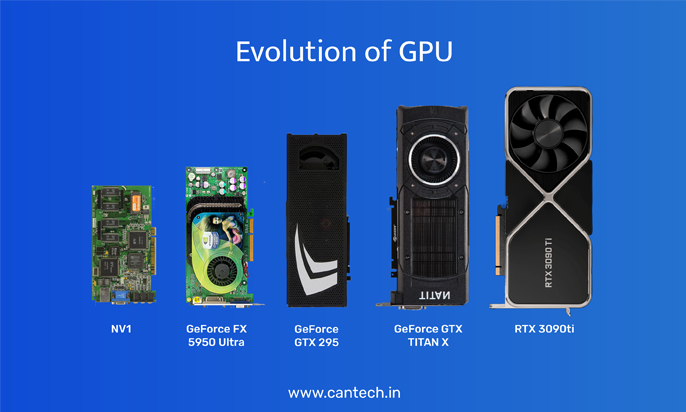
Computer hardware represents the tangible, physical components that make up a computer system. While software provides the instructions, hardware provides the muscle. For technical readers and developers, understanding the interplay between these components is essential for optimizing performance, debugging issues, and designing efficient systems. This article explores the core elements of modern computer hardware, focusing on the evolution of processing units and the rising dominance of graphics processing units (GPUs) in general-purpose computing.
The Core of Computation: The CPU
The Central Processing Unit (CPU) remains the brain of the computer. It executes instructions from software programs by performing basic arithmetic, logic, control, and input/output (I/O) operations specified by the instructions. Modern CPUs are multi-core, allowing them to handle multiple tasks simultaneously. The architecture of the CPU, including its clock speed, cache size, and instruction set, directly impacts the speed at which an application can run. As software complexity grows, the demand for higher single-threaded performance and efficient parallel processing continues to drive CPU innovation.
The Rise of the GPU
Originally designed to render images and video, the Graphics Processing Unit (GPU) has evolved into a critical component for general-purpose computing. Unlike the CPU, which is optimized for sequential processing, the GPU is built for parallelism, capable of handling thousands of threads simultaneously. This architecture makes GPUs ideal for tasks such as machine learning, scientific simulations, and video rendering. The shift toward GPU-accelerated computing has led to the development of specialized programming models that allow developers to offload heavy computational loads from the CPU to the GPU, significantly improving throughput.
"The GPU has transitioned from a peripheral device for gaming to a central pillar of modern data processing and artificial intelligence."
Memory and Storage Hierarchy
Hardware performance is not solely determined by processing power; it is heavily influenced by the memory hierarchy. Random Access Memory (RAM) provides the volatile storage needed for active processes, while storage devices like Solid State Drives (SSDs) offer non-volatile persistence. The speed at which data can be transferred between these components and the processor is a critical bottleneck. Modern systems utilize high-bandwidth memory (HBM) in GPUs and fast NVMe interfaces for storage to minimize latency. Understanding this hierarchy is crucial for developers who need to optimize data flow and reduce wait times in their applications.
Input, Output, and Connectivity
Beyond processing and memory, computer hardware includes various input and output devices that facilitate interaction with the user and the external world. Keyboards, mice, and displays are standard, but the focus has shifted toward high-speed connectivity. Interfaces such as PCIe, USB-C, and Thunderbolt enable high-bandwidth data transfer between peripherals and the main system. For developers, the availability of fast I/O channels is essential for tasks like real-time data streaming, high-frequency trading, and large-scale data ingestion. The standardization of these interfaces ensures compatibility and allows for the modular expansion of system capabilities.
Practical Impact for Developers
For the technical reader, the evolution of hardware dictates the tools and techniques used in software development. The availability of powerful GPUs has opened new avenues for parallel programming, requiring developers to learn new paradigms such as CUDA or OpenCL. Furthermore, the energy efficiency of modern hardware components is a growing concern, influencing the design of data centers and edge devices. Developers must consider the thermal and power constraints of hardware when building scalable applications. The trend toward heterogeneous computing, where CPUs and GPUs work in tandem, requires a deep understanding of both architectures to achieve optimal performance.

What to Watch Next
The future of computer hardware lies in specialization and integration. We can expect continued advancements in semiconductor manufacturing, leading to smaller, faster, and more efficient chips. The integration of AI accelerators directly into CPUs and the development of new memory types like CXL (Compute Express Link) will further blur the lines between processing and storage. Developers should keep an eye on the adoption of these new standards, as they will redefine the boundaries of what is computationally possible. Staying informed about hardware trends is no longer optional; it is a fundamental skill for any professional in the tech industry.
As hardware continues to evolve, the synergy between software and hardware becomes increasingly important. By understanding the physical components that power their systems, developers can make more informed decisions, optimize their code for specific hardware capabilities, and ultimately build more robust and efficient applications. The landscape of computer hardware is dynamic, and staying ahead of the curve requires a continuous commitment to learning and adaptation.