
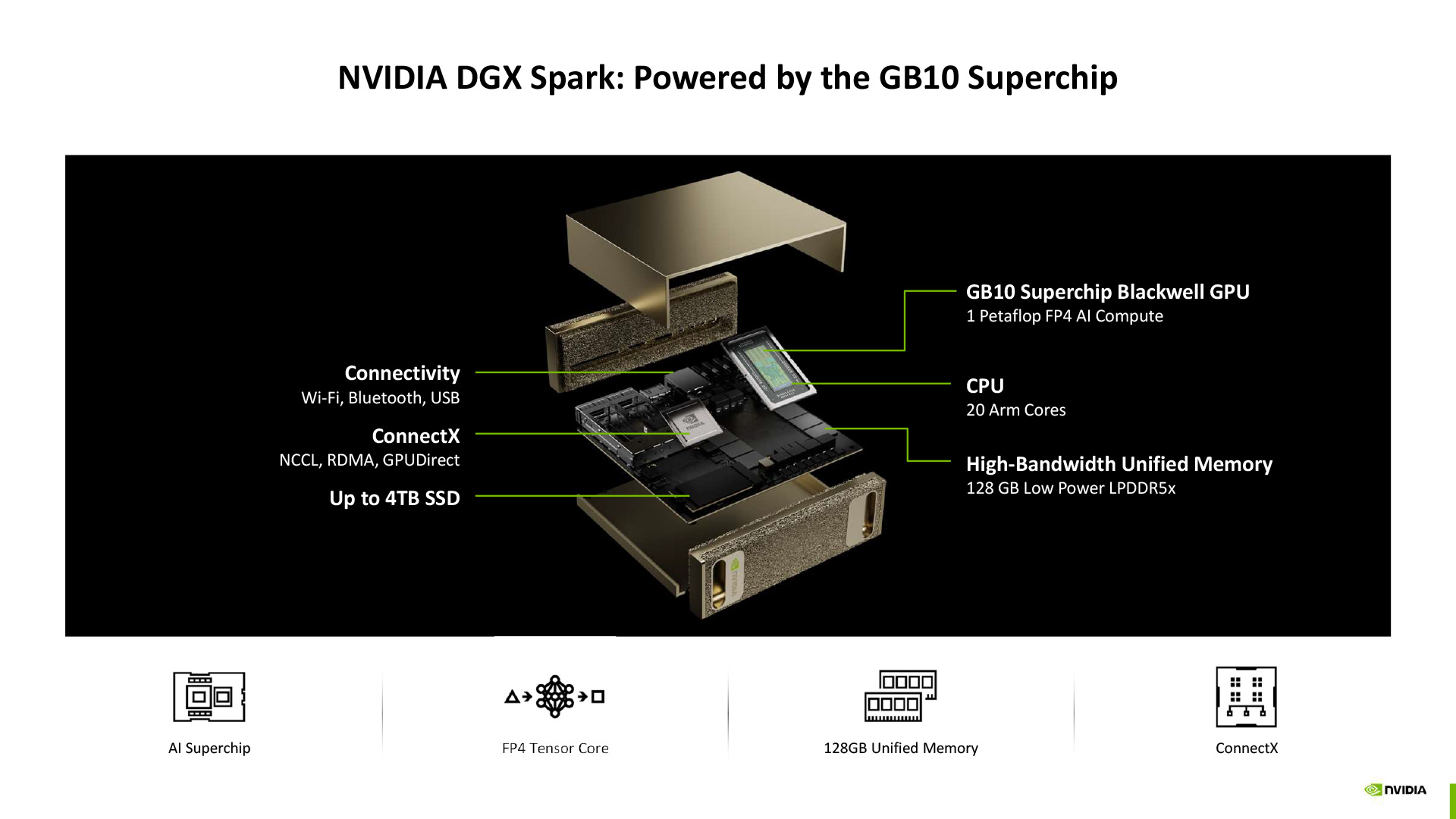
At Computex 2026, Nvidia has officially unveiled the RTX Spark Superchip, a significant architectural shift for consumer and professional computing. This new platform targets both laptops and desktop PCs, marking a departure from traditional discrete GPU setups. By integrating an Arm-based CPU with a Blackwell-generation GPU and a massive 128GB of unified memory, Nvidia aims to redefine the Windows experience as an agentic AI operating system. This move signals a major transition in how local AI workloads are handled on personal devices.
Architectural Shift: Arm CPU and Blackwell GPU
The core of the RTX Spark Superchip is its heterogeneous design. Unlike previous Nvidia consumer products that relied on x86 CPUs from partners like Intel or AMD, this superchip incorporates an Arm-based processor. This architectural choice is critical for power efficiency and thermal management, particularly in thin-and-light laptops. The Arm CPU handles general operating system tasks and application logic, while the Blackwell GPU takes on the heavy lifting for graphics and AI inference.
The inclusion of Blackwell technology brings the latest tensor cores and ray tracing capabilities to the desktop and mobile form factors. This ensures that the hardware is not only capable of running large language models locally but also supports high-fidelity gaming and professional creative workloads. The integration of these two distinct processing units into a single superchip reduces latency and improves data transfer speeds between the CPU and GPU, which is essential for real-time AI applications.
128GB Unified Memory: A Game Changer for Local AI
Perhaps the most striking feature of the RTX Spark Superchip is its 128GB of unified memory. In traditional PC architectures, system RAM and GPU VRAM are separate pools of memory, requiring data to be copied back and forth over the PCIe bus. This process creates bottlenecks, especially when running large AI models that exceed the capacity of standard 16GB or 32GB VRAM cards.
With unified memory, the CPU and GPU share the same high-bandwidth memory pool. This allows the system to load and run significantly larger AI models directly on the device without offloading to the cloud. For developers and data scientists, this means the ability to fine-tune and deploy complex models locally, ensuring data privacy and reducing latency. The 128GB capacity is sufficient to handle state-of-the-art large language models and multimodal AI agents that were previously restricted to server-grade hardware.
Windows as an Agentic AI OS
Nvidia is positioning the RTX Spark Superchip as the foundation for a new era of operating systems. The company promises to turn Windows into an "agentic AI OS," where AI agents can perform complex tasks autonomously within the operating system. These agents can manage files, schedule tasks, and even interact with other applications on behalf of the user, all processed locally on the superchip.
The RTX Spark Superchip is designed to turn Windows into an agentic AI OS, leveraging local processing power for autonomous task management.
This approach shifts the paradigm from passive computing to active assistance. Instead of users manually navigating through menus and settings, AI agents can interpret natural language commands and execute multi-step processes. The local nature of this processing ensures that sensitive user data remains on the device, addressing privacy concerns associated with cloud-based AI services. This feature is particularly relevant for enterprise users who require strict data security protocols.
Practical Impact for Developers and Creators
For developers, the RTX Spark Superchip offers a powerful development environment that mirrors cloud capabilities. The ability to run large models locally accelerates the iteration cycle for AI applications. Developers can test and debug AI agents in real-time without waiting for cloud API responses. This is especially beneficial for building responsive user interfaces and interactive AI experiences.
Content creators also stand to benefit from the enhanced graphics and AI capabilities. The Blackwell GPU supports advanced video encoding and decoding, while the unified memory allows for smoother handling of high-resolution video and 3D assets. The Arm CPU ensures that the system remains efficient during long rendering sessions, extending battery life for mobile users.

What to Watch Next
As Nvidia moves forward with the RTX Spark Superchip, several key developments will determine its success. First, the availability of compatible laptops and desktops from major OEM partners will be crucial. Early adopters will look for systems that fully utilize the 128GB unified memory and the Blackwell GPU’s capabilities. Second, the software ecosystem will need to mature. Developers will need to optimize their applications to take advantage of the unified memory architecture and the Arm-based CPU.
Additionally, the performance of the agentic AI features in Windows will be closely monitored. Users will expect these AI agents to be reliable and accurate, which will require continuous updates and improvements from Nvidia and Microsoft. The success of this platform will also depend on how well it integrates with existing Windows applications and services. If Nvidia can deliver a seamless experience that enhances productivity and creativity, the RTX Spark Superchip could become a standard for high-end computing in the coming years.
In conclusion, the RTX Spark Superchip represents a bold step forward in consumer and professional computing. By combining an Arm CPU, Blackwell GPU, and 128GB of unified memory, Nvidia is creating a platform that is highly efficient, powerful, and ready for the age of local AI. As the hardware becomes available, users and developers will have the opportunity to explore the full potential of this new architecture, potentially transforming how we interact with our computers.