
Transforming Business Operations with AI-Powered Automation
In the rapidly evolving landscape of enterprise technology, the integration of artificial intelligence into daily business operations has moved from a futuristic concept to an immediate operational necessity. Microsoft has positioned its flagship product, Power Automate, at the center of this transformation. As a leading tool within the Microsoft Power Platform, Power Automate is designed to streamline complex business processes by connecting disparate applications, services, and data sources into cohesive, automated workflows. For technical readers and business leaders alike, understanding the capabilities of this platform is essential for navigating the next phase of digital maturity.
The Core of Intelligent Workflow Automation
At its core, Power Automate allows organizations to create custom workflows that trigger actions based on specific events. However, what distinguishes the current iteration of the platform is its deep integration with AI capabilities. These features enable the automation of tasks that previously required significant human intervention, such as data extraction from unstructured documents, sentiment analysis of customer feedback, and predictive maintenance scheduling. By leveraging machine learning models, the platform can interpret data in real-time, making decisions that optimize process efficiency and reduce latency.
The practical impact of these AI-driven features is profound. For instance, in financial services, automated workflows can now reconcile transactions across multiple banking platforms while flagging anomalies for human review. In human resources, the system can automate the initial screening of applications, ensuring that only qualified candidates proceed to the next stage. This shift from simple rule-based automation to intelligent, adaptive automation represents a significant leap in operational capability.
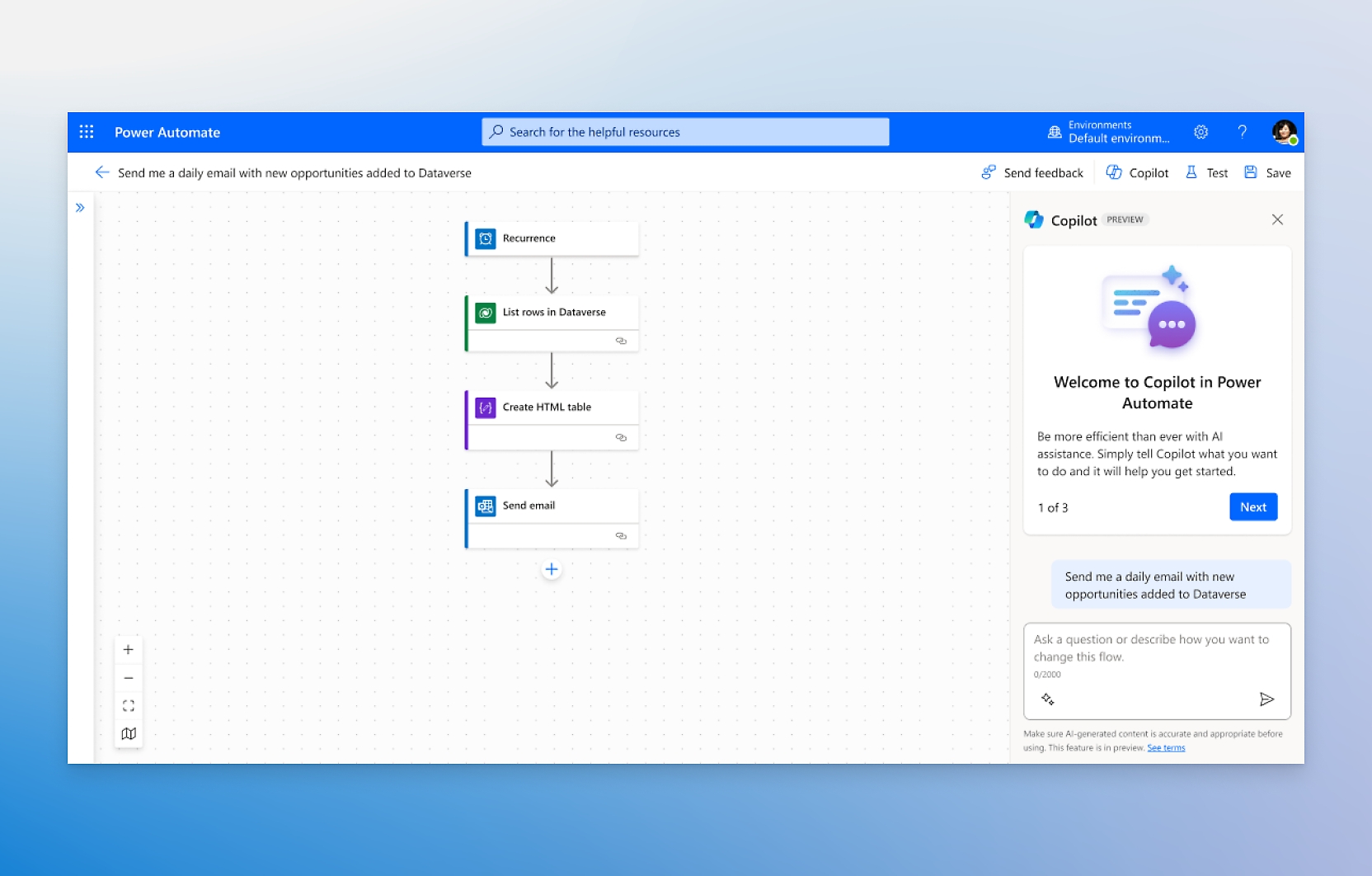
Power Automate enables organizations to automate their business processes, allowing them to focus on more strategic initiatives.
Integration and Connectivity Ecosystem
A critical component of Power Automate’s value proposition is its extensive library of connectors. These connectors facilitate seamless communication between Power Automate and a vast array of third-party applications, including Salesforce, Slack, SharePoint, and various IoT devices. This interoperability ensures that data flows smoothly across the entire technology stack, eliminating silos and reducing the risk of data entry errors. For technical teams, the availability of these pre-built connectors accelerates the development cycle, allowing for the rapid deployment of automated solutions without the need for extensive custom coding.
Furthermore, the platform supports both cloud-based and on-premises data sources, providing flexibility for organizations with hybrid IT environments. This hybrid capability is particularly important for industries with strict data sovereignty requirements, such as healthcare and finance. By ensuring that sensitive data remains within the organization’s controlled environment while still benefiting from cloud-based AI processing, Power Automate offers a balanced approach to automation.
Practical Implications for Enterprise Strategy
For CIOs and IT directors, the adoption of Power Automate signals a strategic shift towards operational agility. The platform’s low-code/no-code interface empowers business users to create and modify workflows without relying heavily on IT departments. This democratization of automation leads to faster innovation cycles and greater alignment between business goals and technical implementation. However, it also necessitates a robust governance framework to ensure that automated processes comply with organizational policies and regulatory standards.
Security and compliance are paramount in any automation strategy. Power Automate incorporates enterprise-grade security features, including role-based access control, audit logging, and data encryption. These features ensure that automated workflows are not only efficient but also secure and transparent. Organizations must, however, actively manage these settings to prevent unauthorized access and ensure that data handling practices meet industry-specific compliance requirements.
Future Outlook and Emerging Trends
Looking ahead, the future of Power Automate is closely tied to the advancement of generative AI. Microsoft is expected to introduce more sophisticated AI models that can generate complex workflows from natural language descriptions. This development will further lower the barrier to entry for automation, enabling even non-technical users to design sophisticated business processes. Additionally, the integration of robotic process automation (RPA) with AI-driven decision-making will create hybrid automation solutions that can handle both structured and unstructured data with high precision.
Readers should watch for updates regarding the platform’s ability to handle multi-modal data, such as images, audio, and video, within automated workflows. As AI models become more capable of interpreting diverse data types, the scope of automation will expand into new domains, such as visual quality control in manufacturing and real-time video analysis in security operations.

Conclusion
Microsoft Power Automate stands as a pivotal tool in the era of AI-driven business transformation. By combining robust workflow automation with advanced AI capabilities, it offers organizations a powerful means to enhance efficiency, reduce costs, and improve decision-making. As the platform continues to evolve, its role in shaping the future of enterprise operations will only grow. For technical professionals and business leaders, staying informed about the latest developments in Power Automate is crucial for maintaining a competitive edge in an increasingly automated world.