
Hardware Fundamentals: Understanding the Physical Core of Modern Computing
In the rapidly evolving landscape of technology, the term "hardware" is often used interchangeably with "computer," yet it refers specifically to the tangible, physical components that make up a system. For technical readers and developers, distinguishing between the abstract logic of software and the concrete reality of hardware is essential for troubleshooting, optimization, and system design. This article explores the core definition of hardware, its primary categories, and its critical role in modern computing infrastructure.
Defining Hardware in the Digital Age
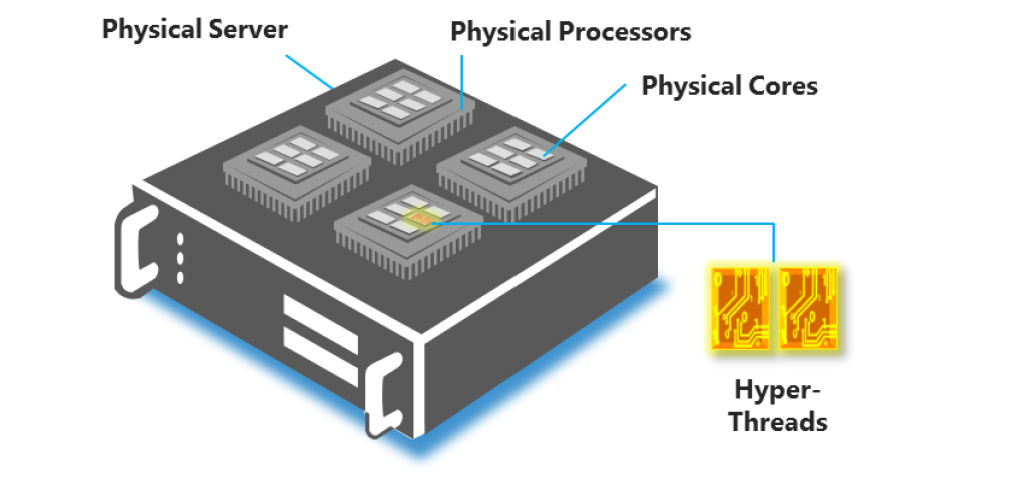
Hardware encompasses all the physical parts of a computer system. Unlike software, which consists of instructions and data stored in memory, hardware is the machinery that executes those instructions. It includes everything from the smallest microchip to the largest server rack. The fundamental principle of hardware is that it provides the physical platform upon which software runs. Without the processor, memory, and storage devices, the code written by developers would have no medium to execute.
Hardware is the physical components of a computer system, distinct from the software and data that it processes.
This distinction is vital for understanding how systems fail or perform. When a developer encounters a "blue screen of death" or a kernel panic, the root cause is often a hardware fault, such as a failing RAM module or a thermal throttling CPU, rather than a software bug. Recognizing this boundary allows for more efficient diagnostic processes.
Primary Categories of Hardware Components
To understand the architecture of a modern device, it is helpful to categorize hardware into several key groups. Each group serves a specific function within the von Neumann architecture, which remains the foundation of most general-purpose computers today.
Processing Units: The Brain of the System
The Central Processing Unit (CPU) is the primary engine of the computer. It fetches, decodes, and executes instructions. In recent years, the rise of specialized hardware, such as Graphics Processing Units (GPUs) and Field-Programmable Gate Arrays (FPGAs), has expanded the definition of processing hardware. These devices handle parallel tasks, such as rendering graphics or training machine learning models, more efficiently than a general-purpose CPU. For developers working on high-performance computing, understanding the architectural differences between these processors is crucial for optimizing code.
Memory and Storage: The Data Backbone
Memory hardware is divided into volatile and non-volatile types. Volatile memory, such as Random Access Memory (RAM), holds data temporarily while the system is powered on. It is fast but loses its contents when the power is cut. Non-volatile storage, including Solid-State Drives (SSDs) and Hard Disk Drives (HDDs), retains data permanently. The speed of memory hardware directly impacts system responsiveness. A developer compiling large codebases will notice significant performance differences between a system with high-speed NVMe SSDs and one with traditional mechanical drives.
Input and Output Devices: The Interface
Input devices, such as keyboards, mice, and touchscreens, allow users to send data to the computer. Output devices, such as monitors, printers, and speakers, present the results of processing to the user. In the context of modern web development, the browser acts as a software interface, but it relies entirely on the hardware capabilities of the device to render complex layouts and play high-resolution video. The performance of these I/O devices determines the user experience, making them a critical consideration in hardware selection.
The Practical Impact on Development and Design
For technical professionals, hardware is not just a static box; it is a dynamic resource that must be managed. Understanding hardware constraints allows developers to write more efficient code. For example, knowing the cache hierarchy of a CPU helps in optimizing data access patterns to reduce latency. Similarly, understanding the thermal limits of a GPU allows for better management of intensive workloads, preventing throttling that can degrade performance.
Furthermore, the choice of hardware affects the scalability of applications. Cloud developers, for instance, must select the appropriate instance types based on the hardware specifications of the underlying servers. A database-heavy application requires high I/O throughput, while a graphics-intensive application requires powerful GPU resources. Misalignment between software requirements and hardware capabilities leads to inefficiency and increased costs.
Future Trends in Hardware Technology
The hardware landscape is continuously evolving. Emerging technologies such as quantum computing and neuromorphic chips are beginning to challenge traditional architectures. Quantum processors, which use qubits instead of bits, promise exponential speedups for specific problems, such as cryptography and optimization. Neuromorphic hardware, designed to mimic the structure of the human brain, is being explored for energy-efficient AI applications. While these technologies are still in the research and early adoption phases, they represent the next frontier for hardware innovation.
Additionally, the trend toward heterogeneous computing is gaining momentum. This approach combines different types of processors, such as CPUs, GPUs, and AI accelerators, on a single chip to handle diverse workloads efficiently. This integration allows for more powerful and energy-efficient systems, which is critical for mobile devices and edge computing applications.

Conclusion
Hardware is the physical foundation of all computing systems. It provides the processing power, memory, and I/O capabilities that enable software to function. For technical readers, a deep understanding of hardware components and their interactions is essential for effective system design, troubleshooting, and optimization. As technology advances, the boundaries of hardware will continue to expand, offering new possibilities for innovation and performance. Staying informed about these developments ensures that developers and engineers can leverage the full potential of modern computing infrastructure.