
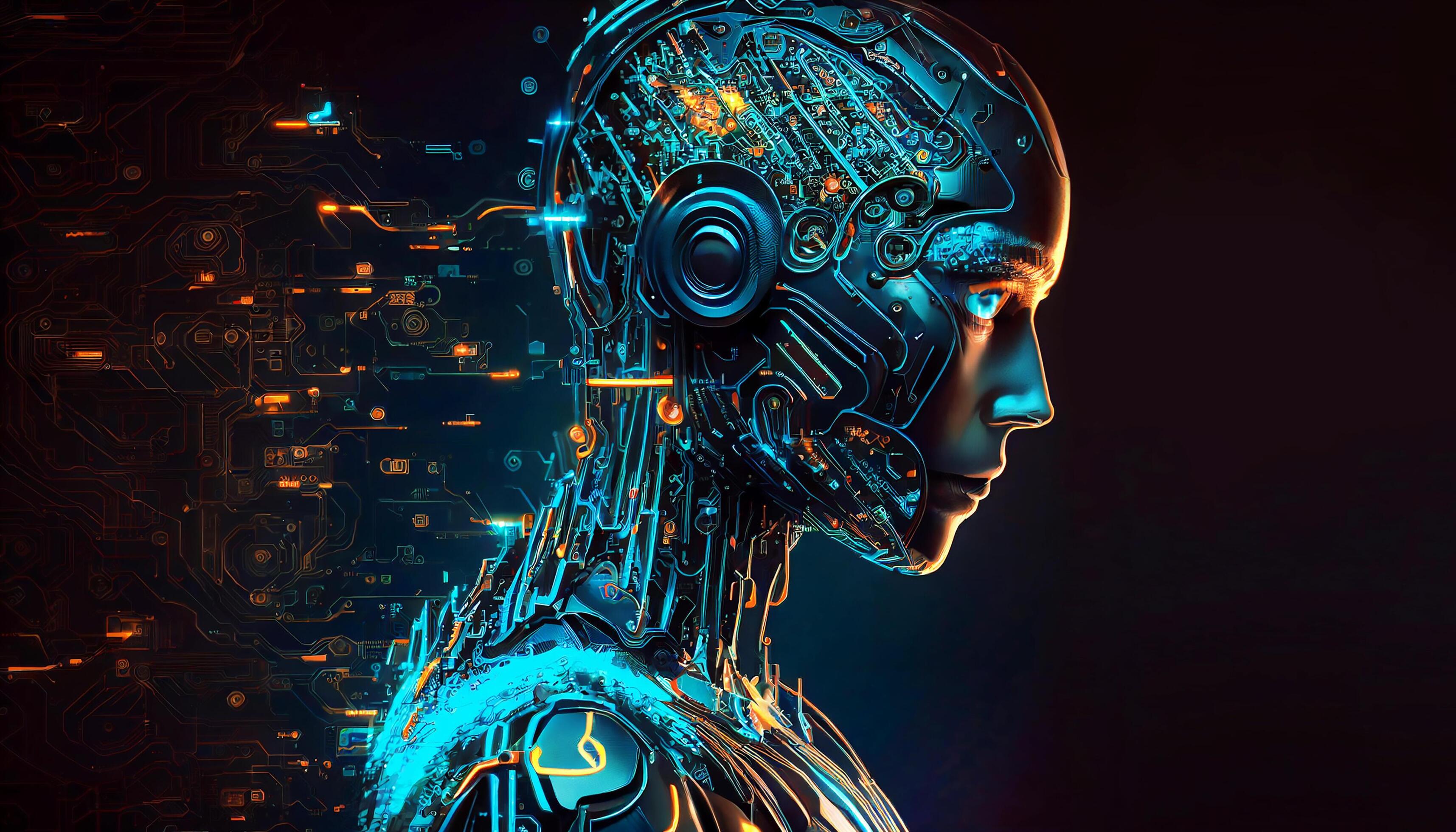
The landscape of personal computing is undergoing a fundamental transformation. For decades, the primary metric for PC performance was raw processing power, measured in gigahertz and teraflops. However, the current technological shift is redefining what it means to have a high-performance computer. The integration of Artificial Intelligence (AI) directly into the silicon of modern PCs is moving beyond marketing buzzwords to become a functional necessity for next-generation workflows. This article explores how AI is reshaping PC architecture, the specific hardware innovations driving this change, and the practical implications for users and developers.
The Shift to AI-First Architecture
Historically, PCs were designed to execute deterministic instructions. Today, the focus has shifted to handling probabilistic models and large language models (LLMs) locally. This shift necessitates a new class of hardware components. The most significant innovation is the rise of the Neural Processing Unit (NPU). Unlike the Central Processing Unit (CPU), which excels at sequential tasks, or the Graphics Processing Unit (GPU), which handles parallel graphics and general-purpose computing, the NPU is specifically optimized for the matrix multiplication operations that underpin AI inference.
Why Local AI Matters
The move toward local AI processing is driven by three critical factors: privacy, latency, and cost. By running AI models on the device itself, users no longer need to send sensitive data to cloud servers. This ensures that personal information remains on the user's machine. Furthermore, local processing eliminates network latency, providing instant responses for tasks such as real-time language translation, background removal in video calls, and generative image editing. For businesses, this reduces reliance on expensive cloud API calls, making advanced AI features more accessible and scalable.
Key Hardware Innovations
Major semiconductor manufacturers have responded to this demand by integrating AI capabilities into their latest product lines. Intel, AMD, and Qualcomm have all introduced processors with dedicated NPUs. These chips are designed to handle AI workloads efficiently while maintaining low power consumption, which is crucial for extending battery life in laptops.
One of the most notable developments is the standardization of AI performance metrics. The industry has begun adopting a unified metric called TOPS (Tera Operations Per Second) to measure the AI processing capability of NPUs. This standardization allows consumers to compare the AI performance of different PCs more easily, similar to how they previously compared CPU clock speeds. A PC with a higher TOPS rating is generally better suited for running larger, more complex AI models locally.
The integration of AI into the core architecture of PCs marks a pivotal moment in computing history, shifting the focus from general-purpose calculation to specialized intelligence processing.
Additionally, memory bandwidth has become a critical bottleneck for AI performance. AI models require large amounts of data to be moved between memory and the processor quickly. Consequently, newer PCs are featuring faster memory standards, such as DDR5 and LPDDR5X, to ensure that the NPU and GPU are not starved for data. This synergy between memory speed and AI processing power is essential for delivering a smooth user experience.
Software Ecosystem and Developer Tools
Hardware alone is insufficient without a robust software ecosystem. Operating systems, particularly the latest versions of Windows, are being updated to provide a unified API for AI tasks. This allows developers to write applications that can automatically utilize the most efficient hardware component available, whether it is the CPU, GPU, or NPU. Frameworks like ONNX Runtime and DirectML are becoming standard tools for developers, enabling them to deploy AI models across different hardware configurations with minimal code changes.
Practical Impact for Users
For the average user, the impact of AI in PCs is already visible in everyday applications. Video conferencing tools use AI to enhance audio and video quality, even in low-light conditions or noisy environments. Creative software is leveraging AI to automate tedious tasks, such as object selection in photo editing or upscaling low-resolution images. For developers, the ability to run large language models locally opens up new possibilities for building privacy-focused applications and offline-capable tools.
However, there are challenges. Not all AI tasks are suitable for local processing. Training large models still requires massive data center infrastructure. Furthermore, the efficiency of AI models varies significantly depending on the hardware. Users must be aware that a PC with a high TOPS rating may still struggle with certain types of AI workloads if the memory bandwidth is insufficient.

What to Watch Next
As AI technology continues to evolve, several trends are expected to shape the future of PC hardware. First, we can expect further improvements in NPU efficiency, allowing for even more complex models to run on consumer devices. Second, the convergence of AI and gaming is likely to accelerate, with AI-driven NPCs and dynamic game environments becoming standard features. Finally, the development of smaller, more efficient AI models will expand the range of tasks that can be performed locally, making AI a ubiquitous feature in all aspects of computing.
In conclusion, the integration of AI into PC hardware is not just a temporary trend but a fundamental shift in how computers are designed and used. As hardware and software ecosystems mature, AI will become an invisible yet powerful force, enhancing productivity, creativity, and privacy for users worldwide. For technical readers, understanding the interplay between NPUs, memory bandwidth, and software frameworks is key to navigating this new era of computing.