
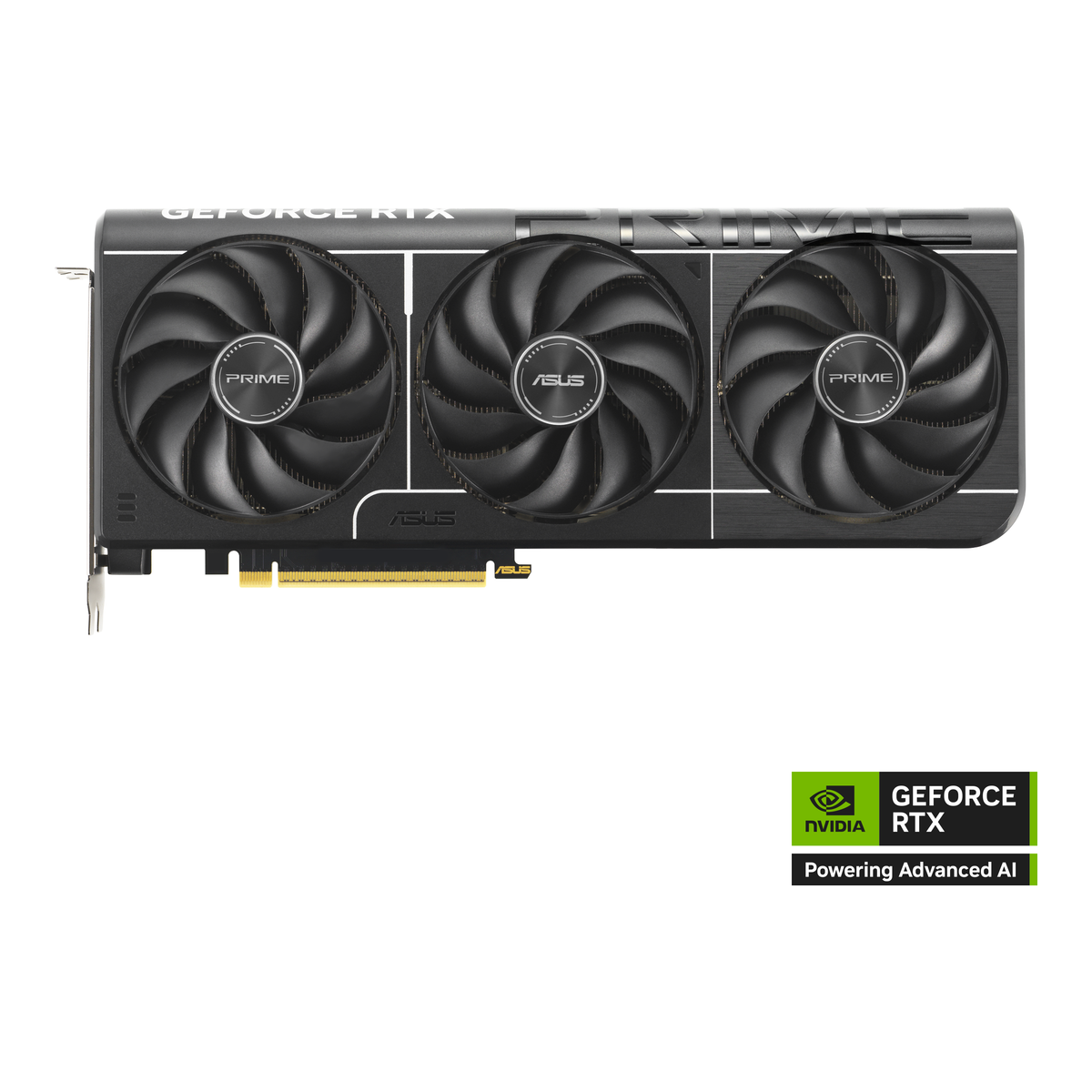
Same VRAM, Different Speeds
In the evolving landscape of local artificial intelligence, the choice between NVIDIA’s Blackwell-generation GPUs has become a critical decision for developers and enthusiasts. A recent comparative analysis highlights the performance disparity between the RTX 5070 Ti and the RTX 5060 Ti 16GB. While both cards feature a 16 GB GDDR7 frame buffer, allowing them to host identical mainstream large language models (LLMs), their inference speeds differ significantly due to memory bandwidth constraints.
The Bandwidth Bottleneck
For local LLM inference, memory bandwidth is the primary limiting factor. When a model fits entirely within VRAM, the GPU must stream weights from GDDR7 memory for every token generated. At batch size 1, arithmetic intensity is low, meaning the speed of token generation is directly proportional to how fast the memory bus can deliver data. The RTX 5070 Ti offers 896 GB/s of bandwidth, whereas the RTX 5060 Ti 16GB provides 448 GB/s. This 2x difference in theoretical bandwidth translates directly into real-world performance gains.
Benchmark Results and Performance Gaps
Testing conducted in June 2026 using Ollama on simultaneous cloud instances revealed consistent performance gaps across three model families. The RTX 5070 Ti consistently outperformed the RTX 5060 Ti 16GB, with speedups ranging from 1.66x to 1.85x depending on the model and precision.
- Llama 3.1 8B (Q4_K_M): The 5070 Ti achieved 125.0 tokens per second (tok/s), compared to 75.1 tok/s for the 5060 Ti.
- Qwen2.5 14B (Q4_K_M): The 5070 Ti reached 73.2 tok/s, while the 5060 Ti managed 42.3 tok/s.
- Qwen2.5 7B (FP16): Full-precision testing showed the widest gap, with the 5070 Ti hitting 51.8 tok/s versus 28.0 tok/s for the 5060 Ti.
The FP16 model exhibited the largest relative difference because it is the most memory-bandwidth-bound workload, requiring the full 15 GB of weights to be streamed on every forward pass without significant reuse.
The RTX 5070 Ti generates tokens 1.66x to 1.85x faster than the RTX 5060 Ti 16GB on the same models, and at September 2026 Amazon prices it actually costs less per token per second.
Cost Efficiency and Power Considerations
Despite the higher upfront cost, the RTX 5070 Ti offers better value for high-throughput tasks. As of September 2026, the street price for the 5070 Ti is approximately $1,230, while the 5060 Ti 16GB is around $790. For users prioritizing raw speed, the higher cost is justified by the superior tokens-per-second ratio. However, the 5070 Ti demands a 300W power supply and a robust cooling solution, whereas the 5060 Ti operates at a more modest 180W TDP.
It is important to note that the 5060 Ti uses a PCIe 5.0 x8 interface, compared to the x16 lanes on the 5070 Ti. While this may impact gaming performance slightly, it is irrelevant for LLM inference once the model is loaded into VRAM, as the PCIe link remains idle during token generation.
Which Card Should You Buy?
The decision ultimately depends on your specific workload and hardware constraints. If you run 14B+ models daily or require low latency for tool-use applications, the RTX 5070 Ti is the superior choice. Its higher bandwidth ensures faster response times and better handling of full-precision models.
Conversely, the RTX 5060 Ti 16GB remains a strong contender for budget-conscious users. It is not a consolation prize; at 75 tok/s on Llama 8B, it outperforms many GPUs from previous generations in the same price tier. If your primary use case involves 7-8B quantized models and you have strict power or case size limitations, the 5060 Ti provides excellent future-proofing for 16 GB VRAM capacity without the premium price tag.

Conclusion
Both the RTX 5070 Ti and RTX 5060 Ti 16GB are capable of running mainstream local AI models entirely in VRAM. The 5070 Ti offers a significant speed advantage driven by double the memory bandwidth, making it the clear winner for performance-critical applications. However, the 5060 Ti 16GB delivers impressive value for general-purpose local AI tasks, offering a lower entry point into the Blackwell architecture. As local AI adoption grows, understanding these bandwidth-driven performance differences will be essential for optimizing both cost and efficiency.