
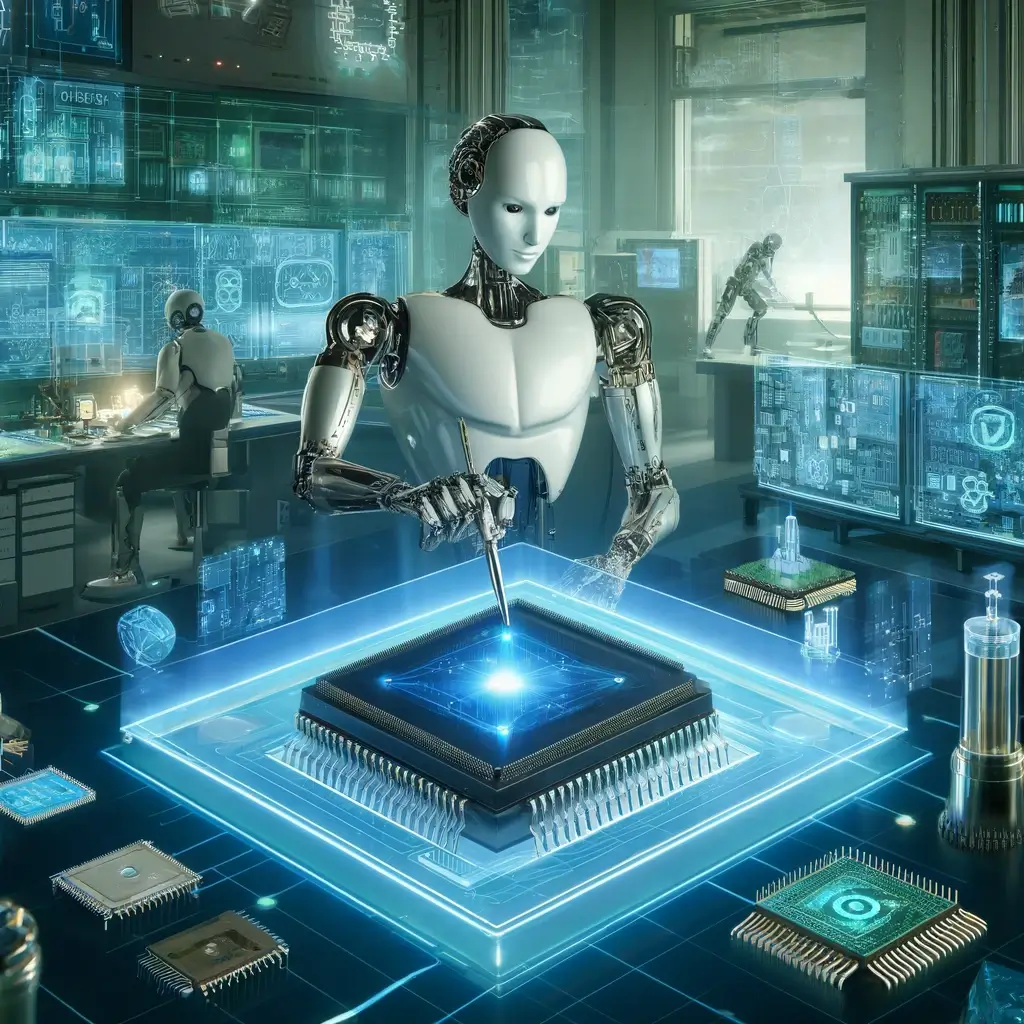
The landscape of personal computing is undergoing a fundamental transformation, driven by the rapid integration of artificial intelligence directly into hardware components. For years, AI was largely associated with cloud-based services and massive data centers. However, the current technological shift is bringing these powerful capabilities to the local machine, redefining what a standard PC can achieve. This article explores the technical innovations reshaping the PC sector, focusing on how AI is moving from the cloud to the silicon.
The Shift to On-Device AI
Traditionally, complex AI tasks required sending data to remote servers for processing. This approach introduced latency and privacy concerns. The new paradigm involves specialized hardware within the PC that can handle AI workloads locally. This shift is not just about speed; it is about efficiency and data sovereignty. By processing data on-device, users can maintain control over their information while enjoying near-instantaneous responses to AI-driven requests.
Hardware Innovations: NPU and GPU Synergy
At the heart of this innovation is the evolution of the processor. Modern CPUs now often include a dedicated Neural Processing Unit (NPU). This specialized chip is designed to handle the specific mathematical operations required for machine learning tasks, such as matrix multiplications, far more efficiently than a general-purpose CPU core. Additionally, GPUs continue to play a critical role, providing the massive parallel processing power needed for training and running large language models (LLMs) locally. The synergy between the NPU for low-power, always-on tasks and the GPU for heavy lifting creates a robust AI ecosystem within a single desktop or laptop.
Manufacturers are increasingly marketing PCs based on their "AI readiness," highlighting the number of TOPS (Trillions of Operations Per Second) their hardware can deliver. This metric has become a key differentiator for consumers looking to future-proof their systems against the growing demands of AI applications.
Practical Impact on User Experience
The integration of AI into PC hardware is not merely a technical curiosity; it has tangible benefits for everyday users. One of the most significant impacts is in real-time video and audio processing. AI-enhanced webcams can now perform background blurring, eye contact correction, and noise cancellation locally, without relying on internet connectivity. This results in smoother video calls and reduced bandwidth usage.
Furthermore, AI is enhancing productivity tools. Text summarization, real-time translation, and code completion features are becoming standard in operating systems and productivity suites. Because these tasks are handled by the local NPU or GPU, they operate with minimal impact on battery life and system performance. Users can experience a more responsive and intelligent interface that anticipates their needs and streamlines workflows.
"The integration of AI into the PC is not just about adding a new feature; it is about redefining the architecture of computing to prioritize intelligence and efficiency at the edge."
Privacy and Security Advantages
A major advantage of on-device AI is the enhanced privacy it offers. Since sensitive data such as documents, photos, and personal communications do not need to leave the user's machine for processing, the risk of data interception or unauthorized access is significantly reduced. This is particularly important for professionals and organizations that handle confidential information. Local AI processing ensures that data remains within the user's control, aligning with growing regulatory and personal privacy standards.

What to Watch Next
As AI technology continues to evolve, several trends are worth monitoring. First, the standardization of AI capabilities across different hardware platforms will likely lead to more consistent user experiences. Second, we can expect to see more sophisticated AI applications that leverage local hardware for tasks such as real-time 3D rendering, advanced gaming AI, and complex data analysis. Additionally, the development of smaller, more efficient AI models will allow even mid-range PCs to deliver impressive AI performance.
For consumers, the key takeaway is that AI is no longer a distant concept but a core component of modern PC design. When purchasing a new system, it is essential to consider the AI capabilities of the hardware, including the presence of an NPU and the overall TOPS rating. This will ensure that the PC can handle current and future AI-driven applications with ease.
In conclusion, the integration of artificial intelligence into PC hardware represents a significant milestone in computing history. By moving AI processing to the local device, manufacturers are addressing key challenges related to speed, privacy, and efficiency. As this technology matures, it will continue to shape the way we interact with our computers, making them smarter, more responsive, and more secure. The future of PC computing is undeniably intelligent, and the hardware is already here to support it.